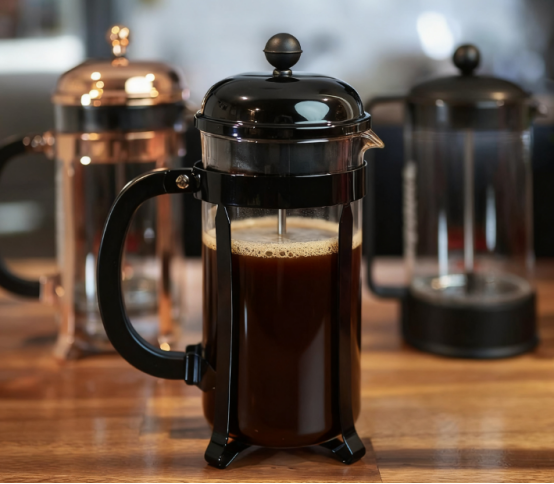
The French press, a timeless brewing device, stands as a testament to simplicity and flavor. For enthusiasts seeking a truly rich, full-bodied black coffee experience, it’s often the first choice. Unlike pour-over or drip methods that filter out much of the coffee’s natural oils and fine sediments, the French press allows for complete immersion of coffee grounds in hot water, resulting in a brew that retains more of its inherent character, body, and aroma. This guide delves deep into the world of French press coffee, offering not just “how-to” instructions but also “why-to” explanations, historical context, and expert strategies to consistently achieve that coveted rich black coffee.
From understanding the critical role of grind size and water temperature to mastering various brewing techniques, we’ll equip you with the knowledge to transform your daily coffee ritual into an art form. Whether you’re a seasoned barista or a curious beginner, prepare to unlock the full potential of your French press and brew coffee that truly sings.
The Art and Science of French Press Coffee
The French press, known by various names such as cafetière à piston, coffee press, or coffee plunger, has a rich history dating back to the mid-19th century. Its design, while seemingly simple, is a marvel of coffee extraction. The basic principle involves immersing coarsely ground coffee in hot water, allowing it to steep for a period, and then separating the grounds from the liquid using a mesh plunger. This full immersion method is what sets French press coffee apart, enabling a robust flavor profile often described as heavy-bodied, rich, and intensely aromatic.
Understanding the underlying science is key to mastering the French press. Coffee extraction is a complex process where water dissolves soluble compounds from the coffee grounds. Factors like water temperature, contact time, grind size, and agitation all play crucial roles. The French press excels because it maximizes contact time and allows for the extraction of a broader range of compounds, including flavorful oils and micro-fines, which contribute to its characteristic body and mouthfeel. However, this also means it’s more susceptible to over-extraction if not managed carefully, leading to bitterness.
A Brief History of the French Press
While its exact origins are debated, early versions of the French press appeared in France around the 1850s. The modern design, featuring a mesh filter attached to a rod, was patented by Milanese designer Attilio Calimani in 1929. Later, the Danish company Bodum popularized the design with their “Chambord” model, making it a household name globally. This history underscores the enduring appeal of its straightforward yet effective brewing mechanism, a testament to its ability to consistently produce excellent coffee without complex machinery.
How the French Press Extracts Flavor
The magic of the French press lies in its full immersion brewing. Unlike drip coffee makers where water passes through grounds quickly, a French press allows coffee grounds to steep completely in the water. This extended contact time ensures maximum extraction of soluble solids, oils, and aromatics. The absence of a paper filter means that beneficial coffee oils, which contribute significantly to the coffee’s body, mouthfeel, and richness, are retained in the final cup. These oils carry many of the volatile aroma compounds, making French press coffee exceptionally fragrant and flavorful.

Essential Gear for Superior French Press Coffee
While the French press itself is a simple device, the quality of your supporting equipment significantly impacts the final taste of your coffee. Investing in good gear is not merely about aesthetics; it’s about precision and consistency, which are paramount for brewing rich black coffee.
Choosing the Right French Press
French presses come in various materials: glass, stainless steel, and ceramic. Glass presses offer visual appeal but are fragile. Stainless steel models are durable, retain heat well, and are often double-walled for insulation, keeping your coffee hot longer. Ceramic options combine durability with aesthetic charm. Consider the capacity based on your consumption habits – a 3-cup (12 oz) for single servings or an 8-cup (34 oz) for multiple drinkers. Look for a press with a fine mesh filter that fits snugly, preventing excessive grounds from passing into your cup.
The Importance of a Quality Grinder
This is arguably the most critical piece of equipment after the coffee beans themselves. A consistent, coarse grind is essential for French press coffee. An uneven grind (too many fines or boulders) leads to uneven extraction, resulting in a bitter or weak brew. A burr grinder (manual or electric) is highly recommended over blade grinders. Burr grinders crush coffee beans into uniform particles, allowing for predictable and optimal extraction. Blade grinders, on the other hand, chop beans inconsistently, creating a mix of fine dust and large chunks, which is detrimental to French press quality.
Water Temperature and Quality
Water quality directly impacts coffee flavor. Filtered water is always preferred, as tap water can contain impurities or chlorine that impart off-flavors. The ideal water temperature for French press brewing is between 195°F and 205°F (90°C and 96°C). Boiling water can burn the coffee grounds, leading to a bitter taste, while water that’s too cool will result in under-extraction and a weak, sour cup. A good kettle with temperature control is a valuable asset.
Method 1: The Classic Immersion Brew
This is the most common and widely recognized method for brewing with a French press, valued for its simplicity and the robust cup it produces. It’s a forgiving method that, when executed correctly, yields a consistently rich and full-bodied coffee.
Step-by-Step Guide
- Heat Water: Heat fresh, filtered water to 200-205°F (93-96°C). If you don’t have a thermometer, bring water to a boil and let it sit for 30-60 seconds.
- Grind Coffee: Measure your coffee beans (typically a 1:15 to 1:17 coffee-to-water ratio, e.g., 60g coffee for 1 liter of water) and grind them coarsely, resembling sea salt.
- Pre-warm Press: Pour a small amount of hot water into your French press, swirl it around, and discard. This helps maintain the brewing temperature.
- Add Coffee Grounds: Place the coarse coffee grounds into the pre-warmed French press.
- First Pour (Bloom): Pour about twice the weight of coffee in hot water over the grounds (e.g., 120g water for 60g coffee). Stir gently to ensure all grounds are saturated. Let it “bloom” for 30 seconds. This allows gases to escape, leading to better extraction.
- Second Pour & Steep: Pour the remaining hot water into the press, gently stirring once or twice to ensure even saturation. Place the lid on top, with the plunger pulled all the way up. Let it steep for 4 minutes.
- Plunge: Slowly and steadily press the plunger down, using gentle, even pressure. Avoid forcing it down too quickly, as this can agitate the grounds excessively and lead to a cloudy, bitter cup.
- Serve Immediately: Pour all the coffee into mugs as soon as you’ve plunged. Leaving coffee in the press will continue the extraction process, leading to over-extraction and bitterness.
Pro Tips for Consistency
- Use a Scale: Measuring coffee and water by weight, not volume, ensures consistent results every time.
- Don’t Stir Too Much: Excessive stirring can increase fines and lead to over-extraction. A gentle initial stir for the bloom and perhaps one more after the main pour is usually sufficient.
- Adjust Steep Time: If your coffee is too weak, increase steep time by 30-60 seconds. If it’s too bitter, reduce it.
- Experiment with Grind: A slightly finer grind can increase richness, but be careful not to go too fine, or you’ll get sludge.
Common Mistakes to Avoid
- Using Fine Grind: Leads to sludge in your cup and difficult plunging.
- Boiling Water: Burns the coffee, resulting in a harsh, bitter taste.
- Leaving Coffee in Press: Continues extraction, making the coffee bitter and astringent.
- Aggressive Plunging: Disturbs the coffee bed too much, pushing fines through the filter.
Method 2: The “Stir-Free” or “No-Bloom” Method
This method, sometimes called the “Hoffmann Method” after coffee expert James Hoffmann, aims to reduce the amount of sediment in the final cup and achieve a cleaner, yet still rich, French press experience. It challenges some traditional French press techniques by minimizing agitation.
Why Less Agitation Matters
The primary goal of the stir-free method is to minimize the creation and suspension of “fines” – tiny coffee particles that can pass through the mesh filter and contribute to a muddy mouthfeel and bitterness. By avoiding initial stirring and allowing a longer bloom period without intervention, the coffee bed settles more effectively, leading to a clearer cup. The absence of a vigorous bloom also changes the extraction dynamics, often highlighting different flavor notes.
The Process Explained
- Heat Water & Grind Coffee: As with the classic method, heat water to 200-205°F (93-96°C) and grind coffee coarsely.
- Add Coffee & Water: Place grounds in the pre-warmed French press. Pour all the hot water (using your desired ratio) over the grounds in one steady pour.
- No Stirring, No Plunging: Do NOT stir. Do NOT immediately place the lid. Let the coffee steep undisturbed for 4 minutes. During this time, a crust of coffee grounds will form on the surface.
- Break the Crust: After 4 minutes, gently break the crust of grounds with a spoon, allowing them to sink. Skim off any remaining foam or floating grounds.
- Wait for Settlement: Let the coffee sit for another 5-10 minutes (total steep time around 9-14 minutes). This extended waiting period allows the fines to settle at the bottom.
- Gentle Plunge & Serve: Carefully place the lid with the plunger just above the settled grounds. Slowly and gently press the plunger down only about an inch or two, just enough to hold the grounds at the bottom. Pour immediately, slowly, and carefully, trying not to disturb the settled bed of coffee.
Ideal for Specific Roast Profiles
This method often works exceptionally well with lighter to medium roasted coffees, as it can bring out their nuanced flavors and acidity without the muddiness that can sometimes accompany a traditional French press. However, it can also produce a remarkably clean and rich cup with darker roasts, showcasing their inherent chocolatey or nutty notes without excessive bitterness.
Method 3: The Cold Brew French Press Technique
While the initial prompt focuses on “rich black coffee” typically implying hot brew, the French press is also an excellent tool for making cold brew concentrate. Cold brew, by its nature, produces a coffee that is incredibly rich, smooth, and naturally low in acidity, fitting the criteria of “rich black coffee” in a different, chilled context.
Benefits of Cold Brew French Press
Cold brew coffee uses cold or room-temperature water over an extended period (12-24 hours) to extract flavor. This process results in a concentrate that is significantly less acidic and bitter than hot-brewed coffee, as the compounds responsible for those flavors are less soluble in cold water. The French press is ideal for this because its full immersion system and easy separation of grounds make it perfectly suited for the long steeping process. The resulting concentrate is intensely rich, smooth, and can be diluted to taste.
Step-by-Step Cold Brew
- Grind Coffee: Grind coffee beans very coarsely. Aim for a grind size similar to breadcrumbs or rock salt. A 1:4 to 1:8 coffee-to-water ratio is common for concentrate (e.g., 100g coffee for 400ml water).
- Combine: Add the coarse coffee grounds to your French press. Pour cold, filtered water over the grounds.
- Stir Gently: Stir briefly to ensure all grounds are fully saturated.
- Steep: Place the lid on the French press (plunger up) and let it steep at room temperature or in the refrigerator for 12-24 hours. The longer the steep, the stronger the concentrate.
- Plunge: After steeping, slowly and gently press the plunger down.
- Strain (Optional but Recommended): For an even cleaner cold brew, pour the concentrate through a paper filter (e.g., a V60 or Chemex with a paper filter) or a fine mesh sieve lined with cheesecloth. This removes any remaining fines.
Dilution and Serving Suggestions
Cold brew concentrate is potent and meant to be diluted. Start with a 1:1 ratio of concentrate to water or milk, and adjust to your preference. It can be served over ice, heated for a low-acid hot coffee, or used as a base for various coffee cocktails and recipes. Store the concentrate in an airtight container in the refrigerator for up to two weeks.
Optimizing Your French Press Brew: Pro Tips & Troubleshooting
Achieving consistently rich black coffee requires attention to detail. These insights will help you fine-tune your process and overcome common brewing challenges.
Grind Size Matters: A Visual Guide
The grind size is paramount for French press. Too fine, and you get over-extraction, bitterness, and sludge. Too coarse, and you get under-extraction and a weak, sour cup. Aim for a coarse, uniform grind. Think of it like coarse sea salt or even breadcrumbs. It should not be powdery or have large chunks.
- Coarse Grind: Ideal for French Press. Resembles coarse sea salt or breadcrumbs. Minimal fines, easy plunging, full-bodied extraction.
- Medium Grind: Suitable for drip coffee makers. Finer than coarse, but not powdery. Too fine for French Press, can lead to over-extraction.
- Fine Grind: Used for espresso. Very powdery. Will clog French Press filter, lead to extreme over-extraction and bitterness.
Water-to-Coffee Ratio Explained
A common starting point is a 1:15 ratio (1 part coffee to 15 parts water) by weight. For a richer cup, you might go as low as 1:12. For example, for an 8-cup (34 oz / 1000ml) French press, you’d use about 60-80 grams of coffee. Experiment to find your sweet spot. Remember, you can always dilute a strong brew, but you can’t strengthen a weak one.
The Perfect Steep Time
For hot French press, 4 minutes is the widely accepted standard. However, this can be adjusted based on roast level and personal preference. Lighter roasts might benefit from 5 minutes, while darker roasts could be fully extracted in 3.5 minutes. For cold brew, 12-24 hours is the range, with longer times for stronger concentrate.
Troubleshooting Common Issues
- Coffee is Too Bitter: Likely over-extraction. Try a coarser grind, shorter steep time, or cooler water.
- Coffee is Too Weak/Sour: Likely under-extraction. Try a finer grind, longer steep time, or hotter water. Ensure proper bloom.
- Too Much Sediment: Grind is too fine, or plunger screen is faulty. Use a coarser grind, or ensure your burr grinder is consistent. Consider double filtering.
- Plunger is Hard to Press: Grind is definitely too fine. Adjust your grinder.
- Plunger Falls Down: Grind is too coarse, or the plunger’s seal is loose.
French Press Coffee Comparison
Understanding the nuances between different French press brewing approaches can help you select the best method for your desired outcome.
| Feature | Classic Immersion (4-min) | Stir-Free Method (Hoffmann) | Cold Brew French Press |
|---|---|---|---|
| Primary Goal | Robust, full-bodied hot coffee | Cleaner, less muddy hot coffee | Smooth, low-acid coffee concentrate |
| Grind Size | Coarse (sea salt) | Coarse (sea salt) | Very Coarse (breadcrumbs/rock salt) |
| Water Temperature | 195-205°F (90-96°C) | 195-205°F (90-96°C) | Cold or room temperature |
| Initial Stirring | Gentle stir during bloom | No initial stirring | Brief stir to saturate grounds |
| Steep Time | 4 minutes | 9-14 minutes (incl. settlement) | 12-24 hours |
| Agitation Level | Moderate | Minimal | Minimal (initial stir only) |
| Sediment Level | Moderate | Low | Low (can be further filtered) |
| Acidity Profile | Medium | Medium-Low | Very Low |
Frequently Asked Questions (FAQ)
- How do I prevent my French press coffee from being bitter?
- Bitterness is often a sign of over-extraction. To prevent this, ensure your grind is coarse enough, your water temperature is not too hot (aim for 200-205°F), and your steep time is not excessively long (typically 4 minutes for hot brew). Also, avoid aggressive plunging.
- What’s the best coffee-to-water ratio for a rich French press?
- A good starting point is a 1:15 ratio (e.g., 60 grams of coffee for 900 grams of water). For an even richer, stronger cup, you can go as low as 1:12. Experiment within this range to find the perfect balance for your taste.
- Can I use pre-ground coffee in a French press?
- While you can use pre-ground coffee, it’s generally not recommended for optimal French press results. Pre-ground coffee is usually too fine for a French press, leading to excessive sediment and over-extraction. If you must use it, look for “coarse ground” varieties or accept a muddier cup.
- Why is it important to serve French press coffee immediately after plunging?
- Leaving coffee in the French press after plunging means it continues to sit with a bed of grounds, albeit separated. This can lead to continued extraction, causing the coffee to become increasingly bitter, astringent, and over-extracted over time. Always pour all brewed coffee into a separate carafe or mugs immediately.
- What is the “bloom” and why is it important in French press brewing?
- The “bloom” refers to the initial pour of hot water over the coffee grounds, allowing them to degas (release carbon dioxide). This process, typically lasting 30 seconds, is crucial because it ensures all coffee particles are saturated evenly and prepares them for optimal extraction. Skipping the bloom can lead to uneven extraction and a less flavorful cup.